
why try?

An intellectual life is a catalog of failures.
Here’s an example from my own life as an academic. I wrote my doctoral dissertation at the University of Chicago on Aristotle’s theory of practical reasoning. I had become interested early in graduate school in the way that Aristotle describes making reasonable decisions when we don’t and can’t know everything about the situation, both as individuals and as part of political communities. People who can successfully do this are called wise, and becoming wise is a real possibility for human beings, wisdom something we can cultivate.
One part of Aristotle’s story is about gaining experience through repeated action in relevantly similar situations. He calls what we learn empeiria, a word that connotes trial and error in Greek and that gives rise to the English word ‘empirical’. Attaining wisdom, the ability to make reasonable decisions in an ethically mature way, requires first gaining sufficient experience. What is distinctive about Aristotle’s approach is that he sees ethical experience as a kind of practical knowledge, a way of knowing how to do things right, not just as a sense of familiarity or a mode of intuition.
But if that’s so, why does Aristotle regard wisdom as something more than just an accumulation of experience? I tried to answer this question in my dissertation, but my answer was not particularly convincing. I focused on the fact that the wise person gets something about the nature of ethical life in general. They see how individual actions fit into a larger picture, in other words. But I didn’t really succeed in characterizing that larger picture of ethical life and how knowledge of it would be of practical benefit, as Aristotle insists that it must be. The wise person isn’t just more enlightened; they really know how to act correctly in a way that the person with experience alone doesn’t.
My dissertation was successful, in the sense that it passed. In fact, it won the Dean’s Dissertation Prize that year from the Humanities Division. Largely on its basis, I got my first tenure-track job in philosophy at Columbia. But it was also a failure. I wasn’t convinced that I had resolved the central problem I had set for myself three or so years earlier.
Fortunately, I had started to develop some ideas in the dissertation about wisdom in politics and the nature of citizenship, so my first few published articles came from that part of my thinking. A fortuitous phone conversation with a friend got me thinking again about Aristotelian justice, so I ended up writing about that, too.
But in my corner of the humanities, people generally write a book. So after a couple of years I decided to go back to my dissertation topic to see if there was a book there. I was more convinced than ever, with the benefit of some distance, that my dissertation as a whole was a failure. Still, there were other avenues to explore that I had set aside, so I started with some of those.
I tried to work out some of the intellectual history that might explain why Aristotle connects practical thinking to uncertainty, spending happy hours in the library reading speeches by the Greek rhetorician Isocrates. I was able to show that some of Aristotle’s argumentative claims about the nature of experience and wisdom are responses to the Isocratean position, which is much more pessimistic about what we can learn from the world.
The contours of a book eventually came into view when I realized that we had to see the wise person’s knowledge not merely as a kind of cool, reflective insight into the bigger picture, but as an essentially practical form of understanding. This understanding connects the bigger picture of ethical life to the individual decisions we have to make through a grasp of the social goals that are truly worthwhile for us to pursue. Like experience, understanding grows and develops. It is not an all-at-once sort of insight. The result of these researches was my book Aristotle’s Practical Epistemology, which was published by Oxford University Press.
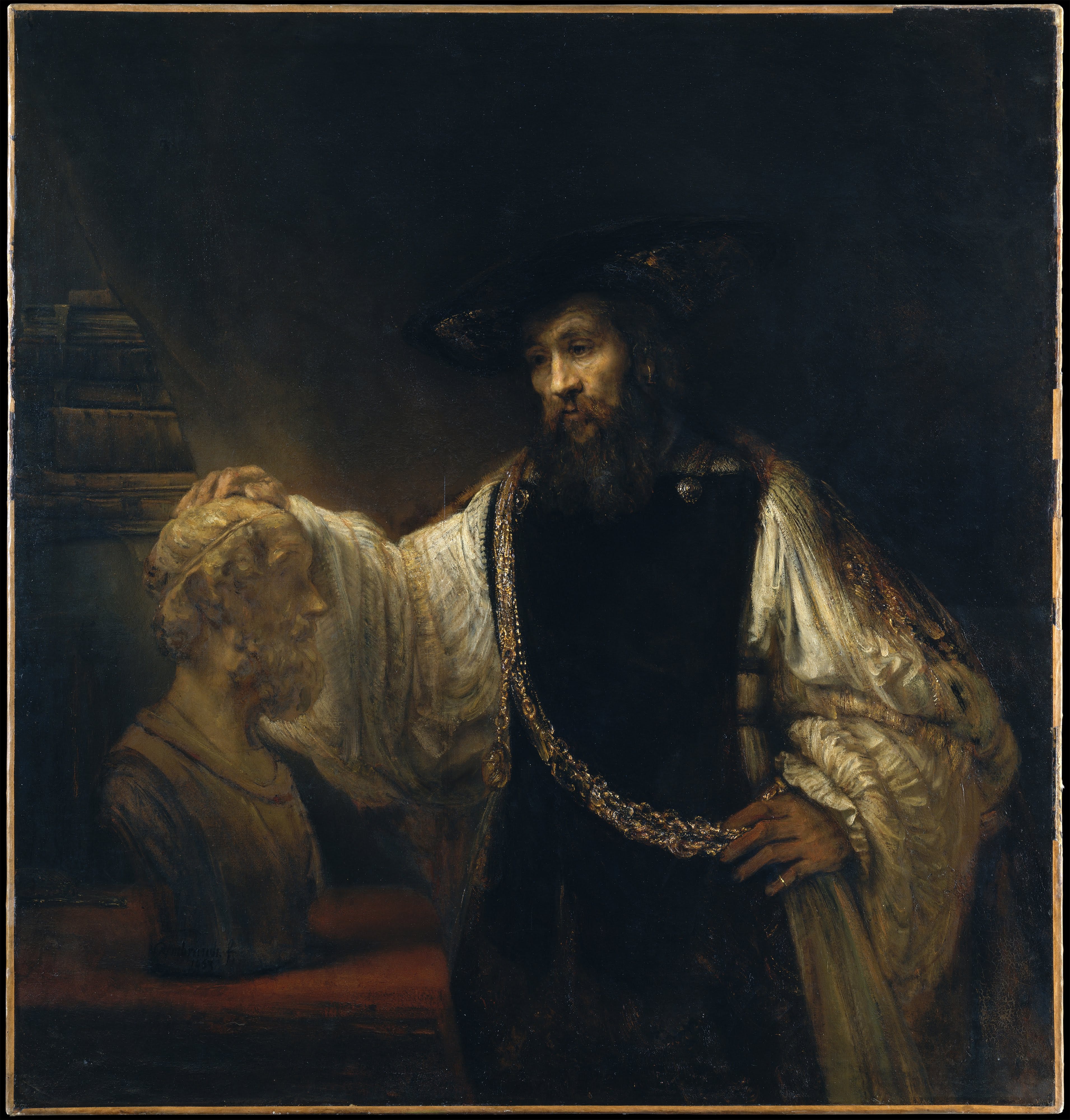
Was that success? Not exactly. I’m still convinced that my interpretation addresses the initial question that I had, but it opens up further questions I’m not sure I know how to solve. Tomorrow [in fact, today] I’ll face some of my critics in a panel at the American Philosophical Association Pacific Division conference. I expect at least some of the objections they raise will be good ones, ones that will either make me unsure of what to say or even convince me positively that I’ve got things wrong. More failure is around the corner. It always is.
When I reflect on all the intellectual problems I have devoted sustained attention to over the past twenty years, I recognize a similar path that runs from formulating a question, through the long and uncertain process of coming up with initial ideas, seeing their limits and then looking for better alternatives, and finally reaches a resolution that itself never quite feels fully resolved. It would be easy to say there isn’t really much point to it.
In fact, philosophy as a whole doesn’t seem to make much progress. Why on earth am I asking questions that Aristotle himself was thinking about a version of 2400 years ago? What could the point of this activity possibly be?
If my goal were simply to come up with and publicly commit myself to a set of views that I think are right, the target would seem to always be moving – do I really remain convinced of what I thought and argued for ten or fifteen years ago? If my goal were instead to win converts to my way of thinking, I would have to recognize that what I write is just a drop in an ocean of scholarship, which is likely to be largely unpersuasive even to the few who read it and are able to weigh it properly against the alternatives.
I have come therefore to see the goal of my intellectual as simply thinking well with others. My ongoing catalog of failures – the books and articles I send out into the world and all the unpublished drafts that never get even that far, the talks whose arguments were defeated by a single devastating question or a barrage of them, the inchoate half-ideas that don’t seem worthy even of a talk – this catalog is just an echo of the real substance of my intellectual life, which is contained in my thinking.
Thoughts are in themselves ephemeral things, less substantial even than the electronic files and web pages that are the primary way scholarly work is disseminated nowadays, but the thoughts you’ve had in the past shape the ones you are able to entertain now and into the future. I may some day find that I am less able to understand the substance of my intellectual life than I used to be, but my experience has been the opposite: as time passes, I seem to see further and in more expansive ways.
So I come now to my answer to the question: why try? The things most truly worth pursuing in life have this character, not of achievement, of getting to some imagined mountain-top of success, but of engagement, of spending one’s time in the right company, that is, with what is true, and good, and beautiful. That is the force of Aristotle’s most famous ethical idea: that happiness names a kind of activity that itself counts as success in living. Success in life, then, turns out to be successfully living in a certain way, not something external to the living, like a badge of honor to be pinned on our chest or a special reward that will one day come.
Friendship offers some useful evidence for the truth of this way of thinking. A friendship is not worthwhile because you are trying to get somewhere else where you and your friend are not. There is, moreover, no external standard of perfection for a friendship that would not be utterly false to its particularity. But whatever the reason for our friendships, if we stop admiring our friends or if we stop feeling their admiration, it’s hard to want to spend our time with them. So even with our friends, we try, though we hope for grace when we fail, as we inevitably will. In that grace rests the soul of true friendship as opposed to more passing forms of acquaintance.1
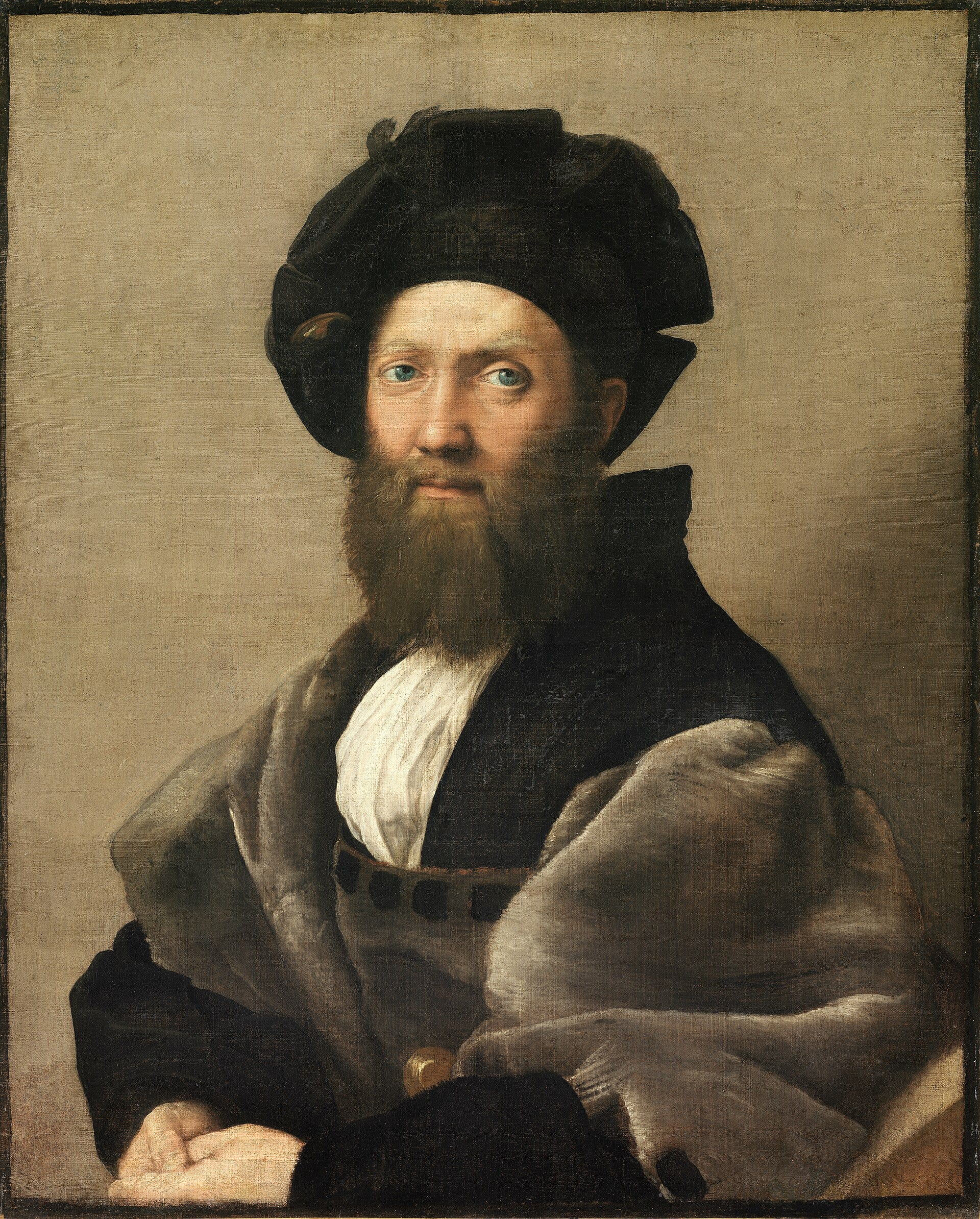
Trying is, admittedly, not popular these days. The worst sin of all is to be seen to try. Castiglione’s ideal courtiers would have been avid users of social media, I think. The kinds of success in life that are widely recognized – money, power, and influence – are all as easily inherited as they are won, and there are many other ways of acquiring them that have nothing to do with your merits or even your own determination or effort.
It may come to seem, then, that it is better to end up with the trappings of success without trying. That is why gambling is as popular as I can ever remember it being, whether in the form of playing the prediction markets or buying cryptocurrency or making intricate bets on your favorite sports from the phone that has as much of your attention as whatever screen actually has the game on it.
Money, power, and influence are things you can seek to win, of course, but they are not proper objects of what I am calling trying, as opposed to intellectual life, friendship (and other meaningful non-transactional relationships with others), and developing and exercising skills and talents. The reason that trying is not popular, then, is simply that the things people take to be most valuable are things it would be better to have without trying or expending any effort at all.
I don’t mean to be saying anything particularly lofty here. The point is obvious and familiar from everyday life. Playing in a pick-up basketball game or tending a community garden just feel better than the grindset or looksmaxxing or any number of other soul-wearying portmanteaux. One reason is that failure at these latter tasks is just failure. You simply don’t have more of the wanted thing – more stuff, more money, more followers, more attention.
Failure is essential when it comes to more worthwhile activities. For one, it sharpens our sense of why success is desirable: we come to see better why it was worth trying for in the first place. Failure also helps us maintain a sense of our own betweenness, our being-toward-something. But that sense of being-toward-something outside and beyond us also connects our individual and fragile lives to what will outlast us. It is, in a way, an image of the divine and the transcendent, which we long for but cannot, here and now, reach. In this way, I am really a Platonist and not an Aristotelian, despite my scholarly focus on Aristotle; I’m not sure how much room there is for this sort of failure and this sort of self-transcendence in the life of Aristotle’s wise person.
As a teacher, I see one of my primary goals as making room for my students to taste the sweetness of such worthwhile failure, given how little of their lives tends to allow for it. I try to do without grades as much as I can, and to redirect my students’ attention away from grades when I do have to give them out. But it is getting harder every year to get my students to try at all.
It is easy to blame technology. I’ve already cast aspersions on social media, and I could’ve spent my entire time here fretting about AI and the ease with which we can substitute it for the difficult and beautiful process of thinking something through for ourselves. But these transformations would not jeopardize the value of trying were it not for a widespread materialism and even a nihilism in our culture, which the ancient philosophers complained about, too. Nihil novum sub sole.
That makes me confident that we have the resources to work out how to do better. Now it’s time, as it is always time, for us to try, really to try, together to see just what that would be like.
[Note to readers: I gave these remarks at the Burke Library at the Union Theological Seminary in New York City, as part of a series sponsored by Commonweal Magazine called ‘Roots: Dialogues for the Common Good’. I was speaking opposite the intellectual historian Elisabeth Lasch-Quinn. Each of us was asked to respond to the questions below:
“Effort involves sacrifice, discomfort, ambiguity, and failure—not to mention the likelihood of disappointment and error. Why, then, do we persist in such labors? When artificial intelligence, ChatGPT, and other technologies offer us an easy way out, why try? Why continue to pursue what we believe to be worthwhile and good the hard way, without the guarantee of success?”
I focused more on the last question, while Professor Lasch-Quinn addressed AI more head-on.
I am grateful to Matthew Baker, Head of the Burke Library, and to my friends at Commonweal for organizing the event, especially Matthew Boudway, who served as moderator, to Professor Lasch-Quinn for our conversation, and to the audience for their lively questions.]
It was only after writing this talk that I remembered that the philosopher Talbot Brewer also connects friendship and the activities that constitute happiness in this way in his book The Retrieval of Ethics.
I am always amazed when you open the door to your thoughts in writing. Keep trying!! Here is a poem for you:
Truth is a quiet morning
Shedding light with patient fingers
Rosy dawn
Coxing life from its unfurled sails
Tickling out the bird song.
Truth billows and spirals
Like wisps of low moving cloud
Dispersing on the mountain
Ever changing its form
Enveloping and revealing.
Truth is the sauntering moon
Pulling the waters of the earth
On invisible strings
Issuing gentle light
in the darkness.
Truth cools the passions of the world
Like the frigid heights of blue sky
That condense the roiling steam
Of volcanic blast
Forming fresh rains.
Truth is a universe of stars
Expanding in the void.
Its indomitable suns
Scattering strange, holy dust
To fall on a faithless Earth.
Truth rests in a poem
Curls itself into the form of a baby
Innocent, unscathed
Sleeping, cozy and safe,
Dreaming a new, nebulous reality.
"The things most truly worth pursuing in life have this character, not of achievement, of getting to some imagined mountain-top of success, but of engagement, of spending one’s time in the right company, that is, with what is true, and good, and beautiful."
One of the things I thought of when reading this sentence is a failure-mode of engagement. When people do activities without really entering into-them. Achievement could be bedfellows with engagement, though it is not necessary that it is. The key is to enter into things, giving to things of your own presence/attention. Trying is right. Devoting one's will to stuff is important, regardless of what the stuff is.