
on objectivity
and what its role in scholarship and journalism ought to be

There’s a report going around the philosophy profession and the wider academy that purports to describe a set of trends in humanities scholarship that have made us an easy target for those who regard universities as bastions of woke nonsense that aim to indoctrinate young people. The report is addressed formally to university chancellors and presidents, but much of it is a broadside aimed at certain intellectual disciplines where fashionable politics, it is alleged, have replaced serious norms of inquiry. Anthropology, literature fields, and Continental philosophy come in for heavy critique.
Both the complaints articulated in the report and the examples amassed within will be broadly familiar to anyone who has spent time in the humanistic corners of the academy. The idea that scholarship ought to serve the cause of social justice – and even that it is valuable primarily to the extent that it does – gets bandied about sometimes, to be sure. Whether these declarations are serious or performative, they have a chilling effect on scholars whose work does not fit this description or who simply have doubts about the specific formulation of social justice that is being presupposed. Still, my sense is that plenty of good scholarship is undertaken even in more politicized fields, and the report acknowledges this fact.
The report goes further, however, in diagnosing the root cause of these political distortions as a relativist epistemological framework, that is, one where truth and knowledge are only ever relative to our social, cultural, and historical circumstances. Much of the pushback to the report has focused on this point as a significant overreach.1 After all, it seems perfectly possible to acknowledge these sources of contingency in human thinking – and even certain forms of relativity that arise from them – without subordinating inquiry to narrowly-defined political aims.

My own reaction to the report is different. I suspect that at least some of the report’s authors, like a lot of analytic philosophers, wish that the humanities could be more like the sciences, especially the natural sciences, conceived of as politically neutral disciplines. As I see it, the effort to make philosophy not only a handmaiden to the sciences but even a sort of quasi-science itself has led to just the sort of jargon-filled, out-of-touch work in analytic philosophy that the report attributes to other corners of the humanities.
One can, for example, find heaps of recent papers on trendy topics like ‘grounding’ and ‘pragmatic encroachment’ that proceed mostly in ignorance of centuries of work in a variety of philosophical traditions (about explanation and pragmatism, respectively). This insularity is downstream of an approach to the discipline that treats philosophy on a par with the latest science, overcoming its predecessors because it has already incorporated their insights and moved on. The added value of such insular work in analytic philosophy seems to me to be rather limited.
I remain grateful for my own philosophical training, which was largely shaped by the norms of analytic philosophy, but my greatest intellectual debts are owed to teachers whose humanistic sensibility outstripped this narrow frame. Moreover, I have come to see my work as indebted to and part of intellectual traditions, such as the Aristotelian tradition in practical philosophy, that stretch back well before the origins of analytic philosophy and its characteristic aspiration to make philosophical investigation as precise as mathematics, which arose only in the late 19th and early 20th centuries.
What’s the alternative to relativism? One notable answer, in the aforementioned report and elsewhere, is objectivity. I’ve been thinking lately about another place in our culture where the opposition between politically motivated inquiry and objectivity turns up: news journalism.
I first took a philosophical interest in this topic a few years back when I happened to be supervising two splendid senior theses at the same time, one on truth in democratic life and the other on civic life and the ethics of journalism. The conversations around the second of these theses circled repeatedly around the vexed discourse within journalism about objectivity that re-emerges from time to time, including most recently after tensions arose between younger social-justice-oriented reporters and their more traditionally-minded newsroom colleagues and editors since 2020.
These newsroom debates seemed ready for greater philosophical clarity about the nature and value of objectivity in journalism, and led me to suggest co-authoring a separate article-length piece tackling this question with due attention to the civic role of news journalism. The resulting piece has just been published in the Journal of Ethics & Social Philosophy (open-access, and so available to all).
My co-author Ence is now working as a reporter at the Washington Post (and I should make note here that the views expressed in the article are ours alone and not the Post’s), and part of our hope in writing this article was to bring the lively debate in newsrooms and in media studies into contact with philosophical reflection about objectivity, which is, after all, itself a concept that originates in philosophy.
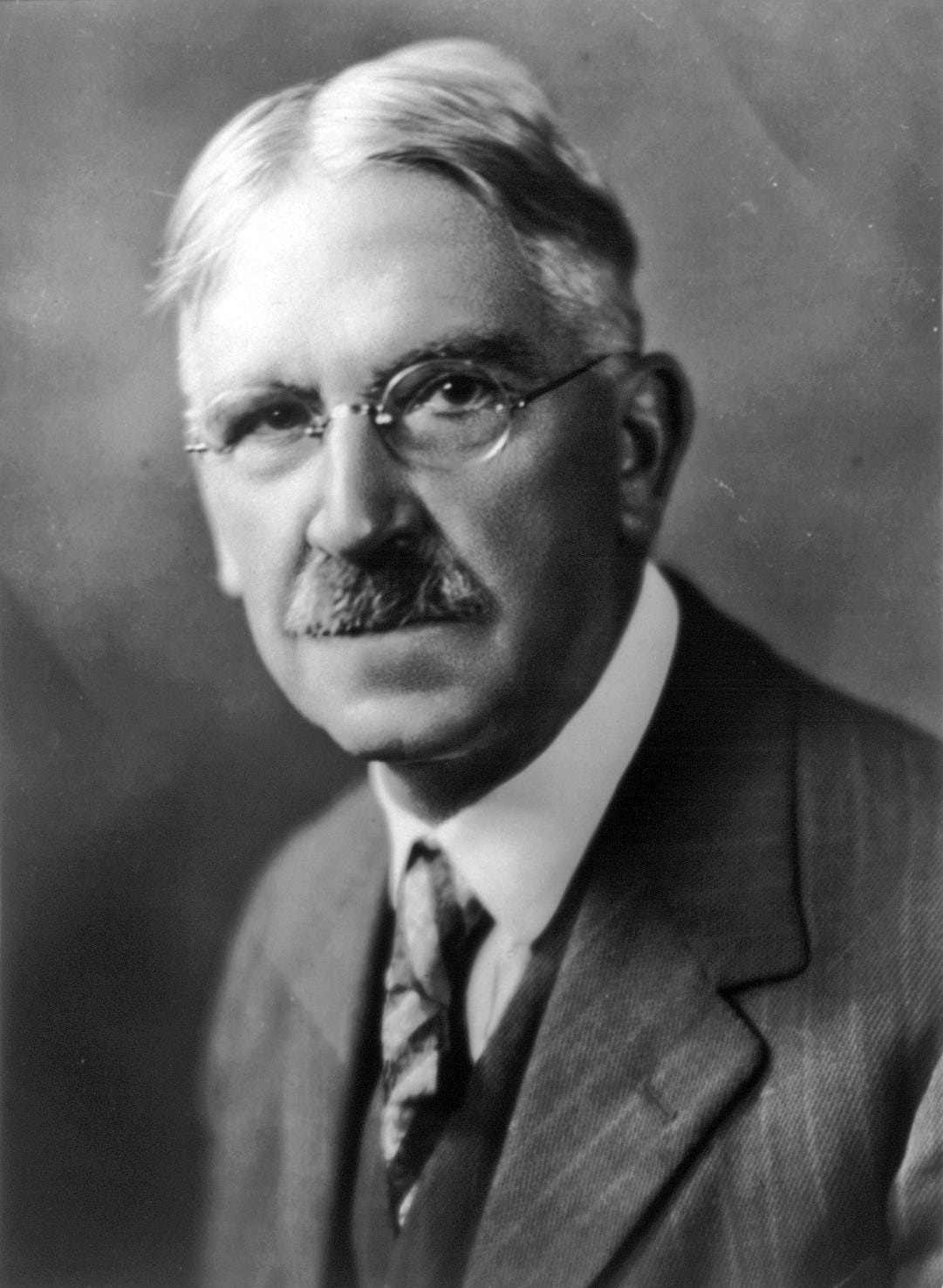
We therefore begin the article with a critical genealogy of the notion as it is used in news journalism, beginning with Walter Lippmann’s conception of the journalist as a sort of priest of the facts, explaining reality on the basis of the latest social science to a public that cannot understand its complexities on their own. This view is one pole of what has come to be seen as a classic debate about public opinion from the 1920s that pits Lippmann against the philosopher John Dewey, who defended a more optimistic view of a democratic public that could articulate the problems facing it for itself, at least under the right communicative conditions. But while Dewey briefly criticizes sensationalist news, he does not articulate a positive vision for news journalism in a democratic society, nor does he offer a rebuttal to Lippmann’s challenge that the world has become too complex for ordinary people to interpret it for themselves.
In the article, we adopt a fairly standard conception of the democratic goals of news journalism – informing the public about matters of importance and holding those in positions of power to account – and argue that living up to these goals means being willing to forgo strict observance of the principles that flow from the ideal of objectivity.
One such principle is positional neutrality, which gives rise to the familiar and sometimes nauseating ritual of both-sidesism in press coverage of political disputes. So eager are editors to avoid the appearance of bias that bad faith arguments and baseless speculation are reliably elevated in our public discourse simply because they represent the ‘other side’ of some controversy. We give parallel arguments about other principles of objectivity, such as the one that forbids emotional language and the one that demands reporting ‘just the facts’, which, for instance, keep reporters from describing lies as lies and lead them to adopt the prevarication of ‘officer-involved shootings’ when a police officer shoots someone.
In place of these principles, we argue that news journalists should see themselves as seeking to advance the democratic goals directly, which requires taking a stand on certain issues while still seeking to avoid the epistemic bias that would result from a purely partisan approach.
In fact, I’ve come to think that to really make the case for the democratic function of journalism, we need to move more decisively past Lippmann’s high-priestly conception of news journalists as interpreting the mysteries of the world for lay people. The case I plan to make in a book-length project I am now working on, titled News Journalism as Political Art, is that news journalism is not just about informing the public or serving as a watchdog, but fostering and preserving what I call the collective self-knowledge of a democratic public: the awareness of our shared hopes and values, our diverging perspectives and experiences, that enables us to act as a public.
We still need news journalism to come to know what is going on in our communities and in the world at large, and the professional judgment that is honed by practice and the resources that are made available to professional journalists to sustain concerted investigation and inquiry are indispensable. The false democracy of social media has only made this last point clearer: where everyone is a reporter, there is no one left to make the news.
In short, we need to see news journalists as part of the democratic public itself rather than independent from it. Or, to put it in the spirit of John Dewey’s New England Congregationalist roots, we need to recognize, in relation to communal life, the priesthood of all believers.
See, e.g., Nicholas Dirks, “What a new report about the humanities gets right and wrong” (Chronicle of Higher Education, June 10, 2026); and Jonathan Kramnick, “Who gets to judge the humanities?” (Chronicle of Higher Education, June 22, 2026). Jason Stanley also has a response on his Substack, and, like me, he notes the inconsistency of the report’s critique of jargon with recent trends in analytic philosophy.