
demonic possession and artificial intelligence

Last Christmas I wrote about angels and AI, a report of the intellectual fruits of a seminar I taught on this subject. The formal title of the course — and of the essay — was “Angels, Demons, and Artificial Intelligence”, and, to be sure, we studied the questions in Aquinas’s Summa Theologiae concerning the demons or fallen angels. We even heard a talk from a philosophy colleague on the nature of demonic possession.
Yet I had little to say in that essay about the demons, an omission that occasioned comment from some readers. Isn’t there something demonic about AI – or at least about the apocalyptic visions of evil super-intelligence peddled by even some AI industry figures and a range of other wannabe Cassandras? (A recent addition to this chorus is the arch-rationalist Eliezer Yudkowsky’s co-authored book with the spectacularly absurd title “If Anyone Builds It, Everyone Dies”, out this week and reviewed just today in TLS.) I mean to make up for this omission here.
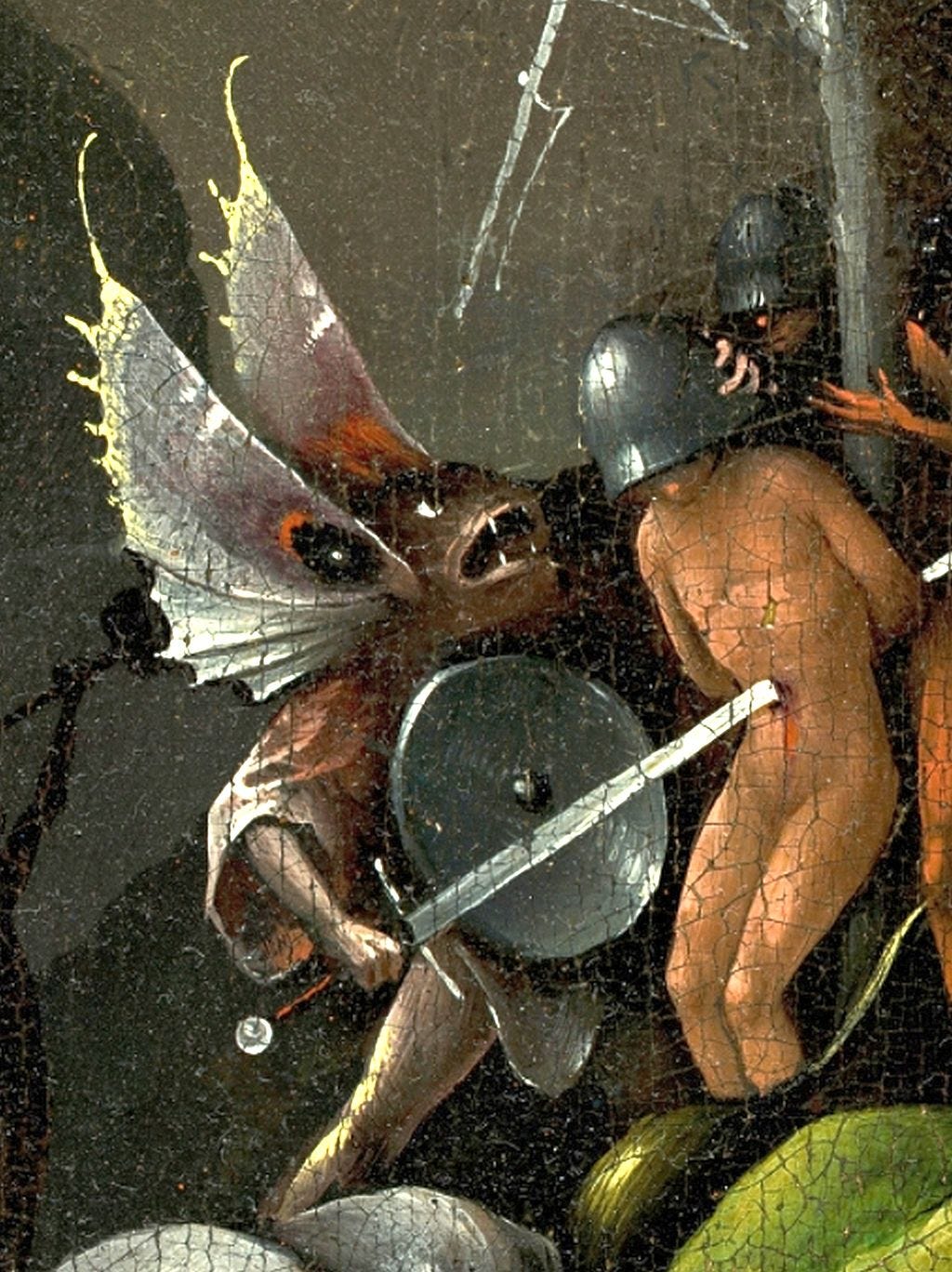
The place to start is my observation that
Angels […] are commonly depicted as a part of the premodern imagination that ‘science’ or ‘reason or ‘the Enlightenment’ has swept away. What I have come to think is that the angels can help us overcome some deep confusions about the nature of intelligence that the Enlightenment-era mechanical philosophy and its descendants (particularly the computational theory of mind) have encouraged in our own time.
As I argued, we stand in need not only of better philosophical arguments about the nature of intelligence, but also imaginative resources to push back on the computational theory of mind, which has become a kind of cultural default — a meme that insidiously begets many others.
But while angelic super-intelligence offers us a standard that we can use to scrutinize claims about the intelligence of — and the intellectual superiority of – LLMs, the relevance of the demons seems rather more remote.
I believe that the ways that demons have been thought to interact with and manipulate human beings can give us insight into the vulnerability of our intellectual lives, which are pressed against from every quarter by AI and related technologies, and help us see how we might go about pressing back in order to defend the worth and importance of human intellectual endeavor.
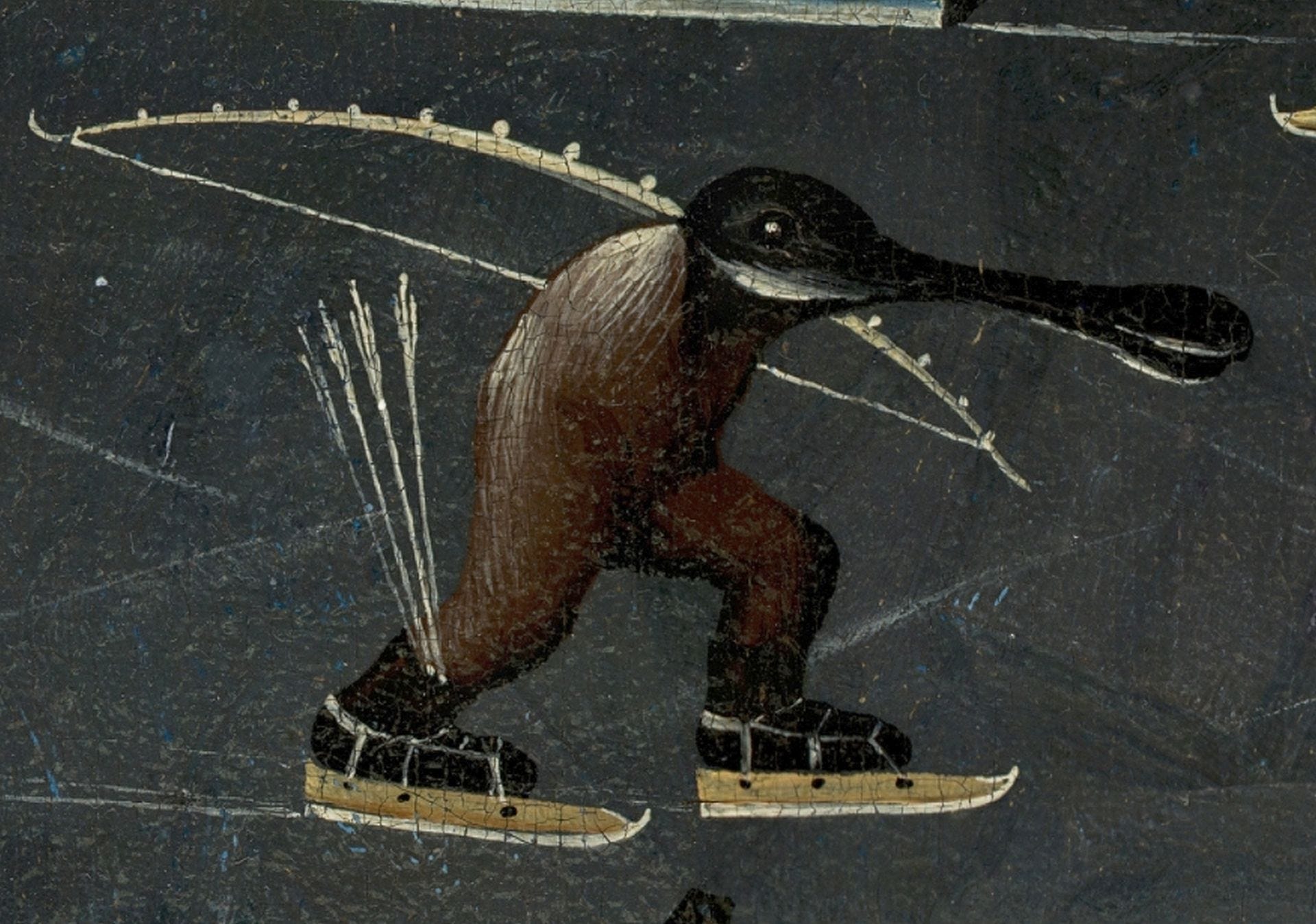
The demons, in the traditional account presented by Aquinas, are simply those rebel angels who turned down God’s offer of friendship and happiness through him out of their fruitless but still powerful desire to be the source of their own glory and happiness, a decision they made as soon as they were created. I assigned my students Milton’s Paradise Lost to provide a richer narrative version of this basic account, while pointing out some of his theological departures from Aquinas, not least his striking insistence on the materiality of the angels and the demons alike.
While they are, according to Aquinas, intellectual and spiritual creatures, the influence of the demons on the material world is as varied as that of the angels. But the idea of demonic possession — the co-optation of the human body by one or more of these hostile intelligences — retains a special cultural significance. After all, among the most vivid of the Gospel stories are those of Jesus casting out demons and thereby healing their victims.
Cultural depictions of demonic assault and possession have been equally vivid, from St Teresa of Ávila’s account of spiritual warfare in her 16th century classic The Interior Castle down to movies such as The Exorcist and TV shows like Evil. These narratives reflect the uneasy place of demonic possession as a scripturally attested and theologically verified occurrence as well as a site of projection for cultural and political anxiety, worry over mental illness and other disorders of the mind, and the horror that the human body and its dysfunction can provoke in us.
There is a great deal one could say about each of these sources of anxiety, but I want to turn back to Aquinas’s own view of demons as, like angels, immaterial intelligences that can act on the material world.
As Aquinas notes, angelic communication or presence to us can take one of two forms, the manipulation of inanimate matter to create a public simulacrum of physical embodiment or the manipulation of an individual’s imaginative capacities to create a private vision or impression. The very fact that we receive information about the world perceptually and represent the world imaginatively sets our minds apart from the angels and demons but also makes us susceptible to them in each of these two ways.
Of course, since the angels and demons can affect material reality, they can also impinge on us by applying movements to parts of our bodies that we do not consciously will. Demonic possession of this kind is no different than any other case of physical manipulation, except that these movements can seem to originate within us.
Following the lead of St Teresa, I find far more disturbing the kind of intellectual influence that our vulnerable imaginations allow. Here, the line between movements that we will and those that we do not control becomes blurred. If we are made to see — or rather hallucinate — something that is not really there, our resulting actions seem both ours and not-ours: ours insofar as we have made a given choice and willed an action; not-ours insofar as we have been manipulated by a bad actor to believe something false, our agency compromised. At the limit, we might be cut off from the world entirely, that is, the real world.
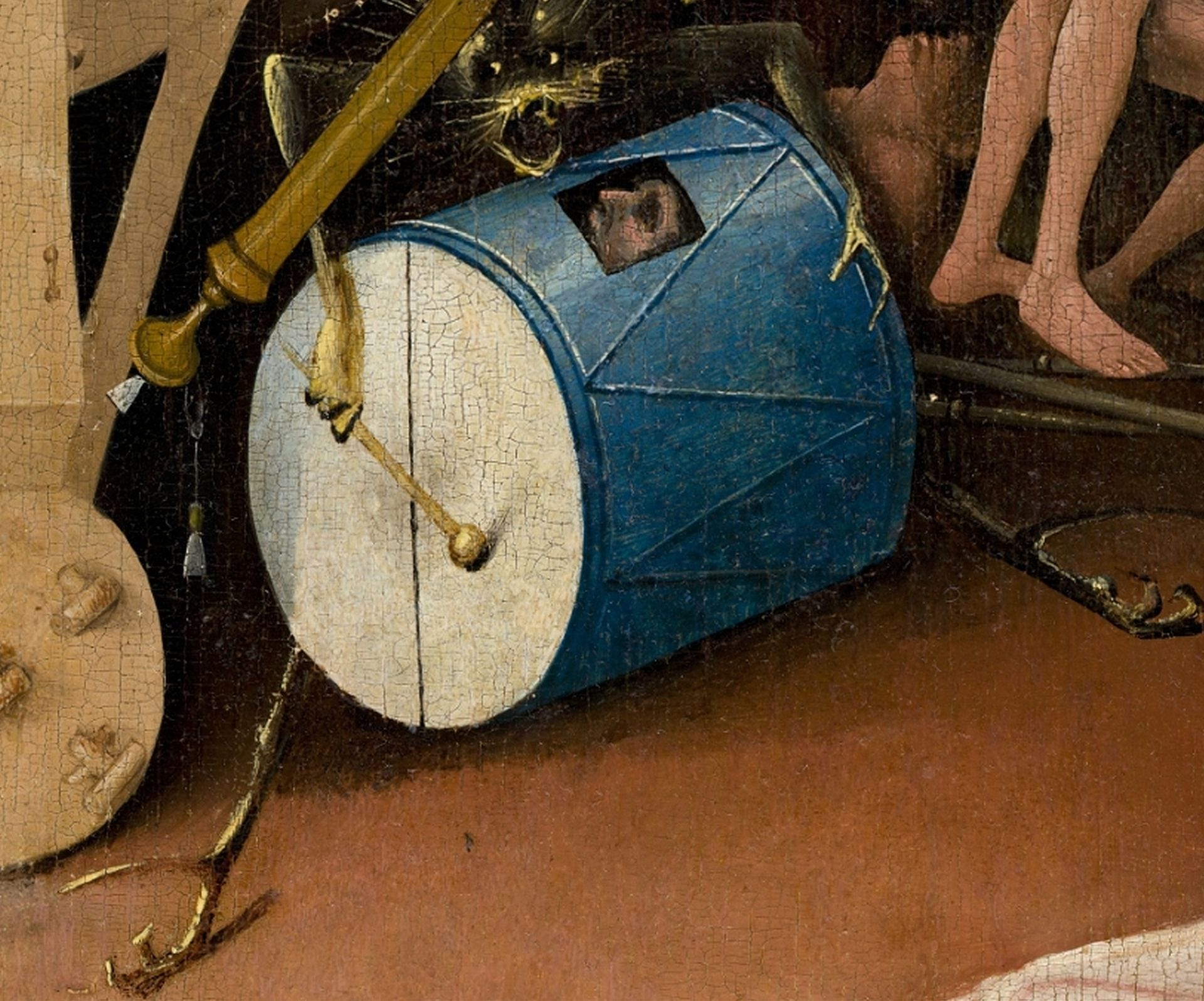
To be clear, I don’t exactly find St Teresa’s world-view of constant spiritual warfare with demonic forces plausible. But in this picture, we do find a helpfully clear-sighted sense of the limits of human intelligence, the dependence of our thinking not only on fallible senses but on a piece-by-piece discursive view of the world that is subject to manipulation by others.
The disorders of our information environment are numerous and have long histories, some of which might even be reflected in these pre-modern world pictures, but the co-optation of attention by powerful technology companies, through smartphones and, more broadly, through making everyday life depend on digital communication, poses a new and distinct challenge to our intellectual lives.
To put it simply: our habits of engagement with our immediate physical environments, conjoined to social habits of trust and testimony, have been up-ended, leaving us vulnerable to a loss of truth. The truth in advice to ‘touch grass’ is simply that our habits of knowledge-formation are intimately connected to our perceptual capacities, which are oriented to truth-seeking in an embodied physical landscape that we are increasingly detached from. (When was the last time you saw a child look out the window of a bus instead of at a screen?)
Against this background, the rise of artificial intelligence in our lives should seem even more disturbing. I don’t subscribe to the ‘dead internet’ theory, but using formerly-important tools like Google search increasingly feels like walking in a garden of forking paths shoveling AI slop (a more pungent word comes to mind) out of the way. I may lose the war against AI in my classrooms, but if I knew for certain that the majority of the assignments I was reading are AI-generated, perhaps I would give in to automated grading myself. What would be the point of doing it myself?
This perceived loss of agency, which follows in the wake of a loss of control over our information environments, can be understood on the model of demonic possession – except that instead of discrete hostile intelligences, we are subject to the invasion of our minds by the faux-intelligence of these amalgamations of human thoughts, poorly digested and reduced to the lowest common denominator. I was particularly aggrieved to see advertisements on the New York City subway recently for a service called ‘Friend’, a $129 wearable AI-powered device to talk to in lieu of a real person; finding uninteresting people to talk to is, happily, still free.
The truth that underlies this sense of assault is that human intelligence is not only imaginative, but also social. The pursuit of knowledge and truth are essentially shared endeavors, and our ability to navigate the social and physical world depends on what we constantly learn from others. These social processes are being undermined by a toxic mix of social media, AI, and physical isolation through phenomena like remote work.
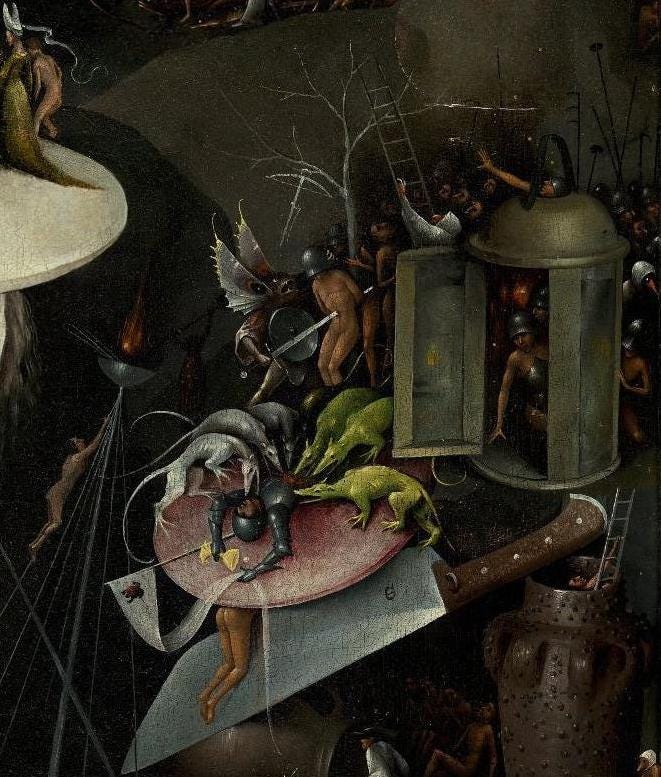
AI-industry boosters and other technologists are anxious that their efforts will create a powerful, independent mind that will have no concern for our welfare. While I find the alignment problem interesting as a fan of science fiction, the rather more mundane disruption of a technology that offers to substitute its ‘thinking’ for our own, its simulacrum of humanity for real presence, is bad enough all by itself, especially when there is little evidence of benefit and every evidence of a money-grab of spectacular proportions.
One might even, in a poetical mood, call it demonic.
I'm having trouble understanding what 'information environment' means in the sentence about losing control over them.
What is unique ab 'generative ai,' compared to what took the title 'ai' in the century preceding it, is its effective implementation of a model of the human brain's reception of 'information' through chemical-electrical impulses from its 'nervous' environment (Freud, Scientific Psych., 1895; Paul Werbos, Beyond Regression: New Tools for Prediction..., 1974). The term 'ai' coined 1956 designated the move away from the neural network attempt and toward what is today called 'symbolic' not 'generative' ai. Generative ai was abandoned in the 40's since it was thought one would have to have an 'evolved' simulated brain to perform like a real brain and so time scale was less feasible.
I have to laugh about the go touch grass comment as I agree and recently wrote about that very recommendation.
https://www.polymathicbeing.com/p/go-touch-grass